


Description
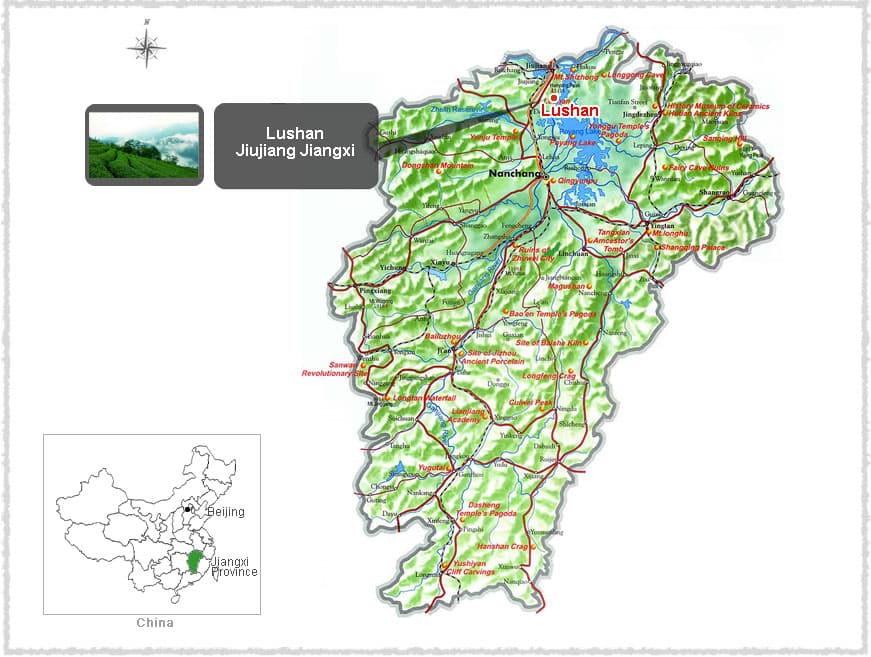
| Origin: | Lushan, Jiujiang City, Jiangxi Province, China |
|---|---|
| Season: | Spring Tea |
| Harvest Date: | April 8, 2025 |
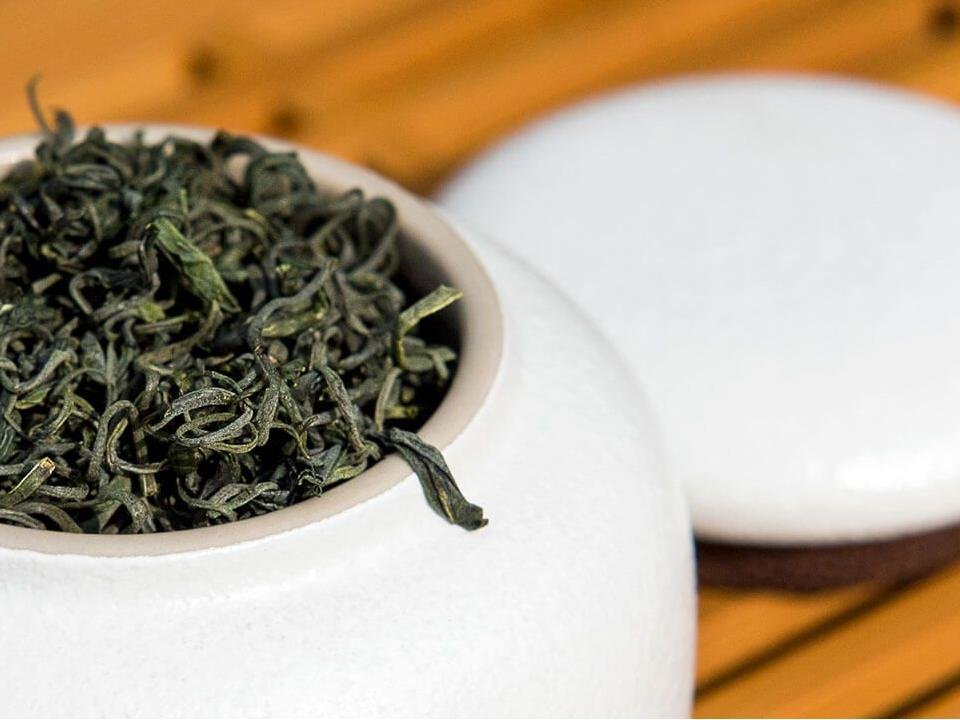
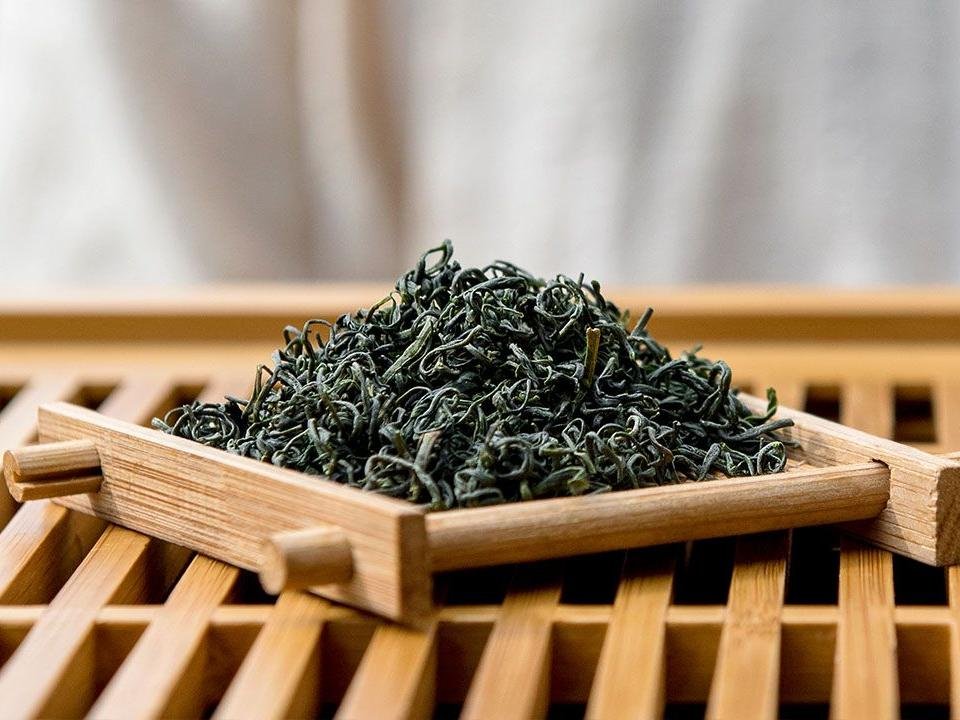
| Dry Leaf: | Tender buds and leaves with tightly curled shape, glossy jade color |
| Aroma: | Floral, chestnut, stir-fried bean aroma |
| Liquor: | Yellowish green |
| Taste: | Refreshing and brisk taste with long-lasting fragrance,
sweet and mellow, enduring infusions |
| Tea Bush: | Small-leaf tea bush species |
| Tea Garden: | Wu Lao Feng Tea Garden |
| Caffeine: | Low caffeine (less than 10% of a cup of coffee) |
| Storage: | Store in airtight, opaque packaging; keep refrigerated |
| Shelf Life: | 18 Months |
 |
Cup Method |
 |
Chinese Gongfu Method |
 |
Teacup: 8.8oz / 250ml | |
Gaiwan: 3.8oz / 110ml |
 |
185℉ / 85℃ | |
185℉ / 85℃ |
 |
1.5 Teaspoons / 3g Tea | |
4g Tea |
 |
Brewing time: 3 – 5 mins | |
3 steeps: rinse, 20s, 30s, 40s |
Wu Lao Feng Tea Garden is located to the east of Lu Shan at an elevation of about 800 meters.
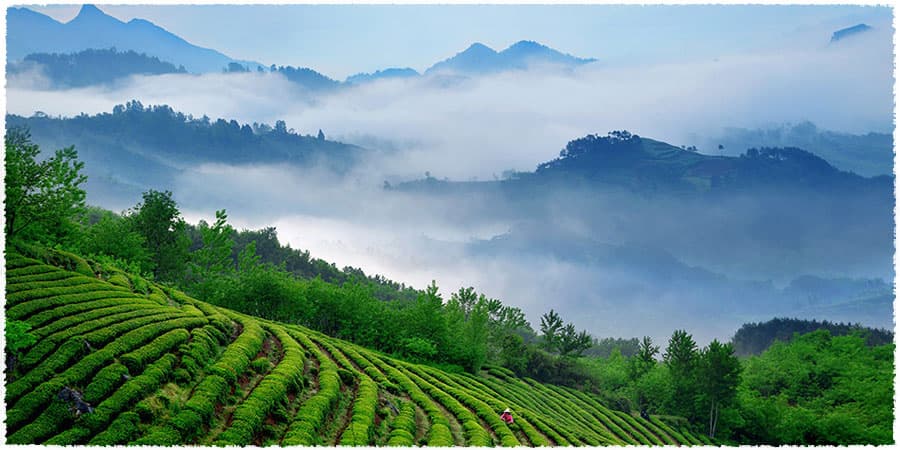
The abundance of rivers and lakes in this area lends to resilient clouds and mist, resulting in perfect weather in this area through about half the year to produce the Yun Wu tea.
Mr. Kong has been involved in the tea industry for more than ten years, and focuses on growing high-quality and increasingly natural, safe, and healthy teas. He once elaborated his feelings on tea culture: “It’s a general concept, different for people in different areas. It’s complex, but there’s one thing that can be sure: just the same as managing any enterprise, tea culture also needs management along with its quick development in the modern world.”
Lu Shan Mountain stands in the southern region of Jiujiang City in Jiangxi Province, providing a beautiful landscape. This tea is named Yun Wu because it is grown at an elevation of 800 meters, where clouds and mists linger for about half the year. The average temperature in this area is about 11.4°C, which leads to a unique environment for this tea when the moisture is taken into consideration.
The local small-leaf trees in Lu Shan sprout in early spring, with buds that grow quickly and healthily in abundance. New flushes are strong and short with little pekoe, and the leaves come to be jade green. These plants have a strong resistance to cold, which is beneficial for green and black teas.
The spring buds contain 3.7% amino acids, 18.5% polyphenol, 12.1% EGCG, and 4% caffeine.
The Lu Shan Mountains have a long history of being a tea-growing region. This history can be traced back to the Eastern Han Dynasty, around 25-220 AD; it was recorded that the monk Hui Yuan lived in these mountains for over thirty years, during which he gathered other monks and Buddhists, spread the religious ideology, and planted tea trees on the mountain. Lu Shan Yun Wu itself did not appear until the Ming dynasty, and Including this period, it has been in production for over three centuries.
Additional information
| ounce | 4 oz(113g), 8 oz(227g) |
|---|
Related products
-
Sale!

Yunnan Gongfu Fragrant Black Tea
Price range: $10.80 through $19.90 Select options This product has multiple variants. The options may be chosen on the product page -
Sale!

Award Winning Premium Lu Shan Yun Wu Green Tea
Price range: $19.90 through $39.90 Select options This product has multiple variants. The options may be chosen on the product page -
Sale!
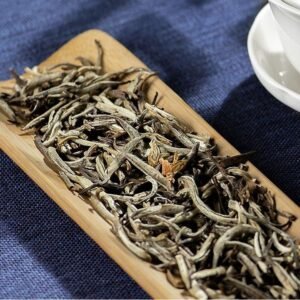
Jasmine Silver Needle White Tea (Mo Li Yin Zhen)
Price range: $18.80 through $32.80 Select options This product has multiple variants. The options may be chosen on the product page -
Sale!

Nonpareil Cha Wang Tai Ping Hou Kui Green Tea
Price range: $42.90 through $79.90 Select options This product has multiple variants. The options may be chosen on the product page
Reviews
There are no reviews yet.