Description
| Origin: | Da Guyun village, Shexian(歙县), Huangshan, Anhui Province, China |
|---|---|
| Season: | Spring Tea |
| Harvest Date: | April 9, 2025 |
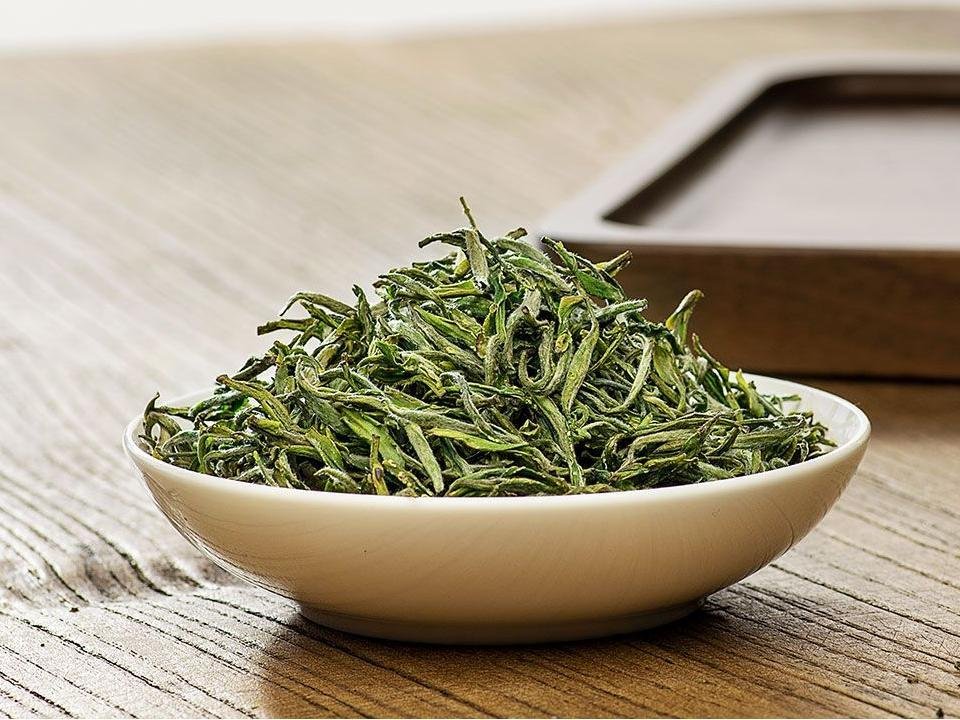
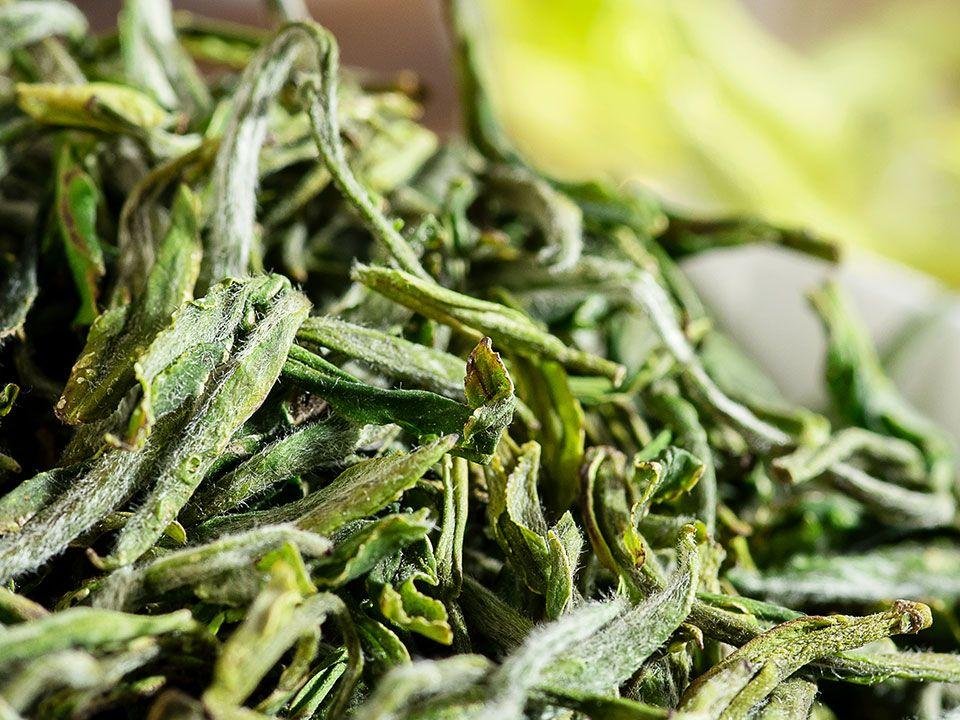
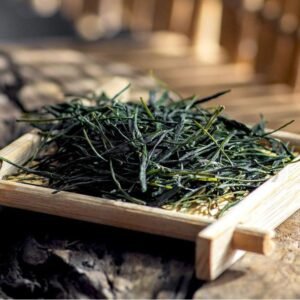
| Dry Leaf: | Wavy leaves which come to a sharp point at the tip,
often tiny leaves are curled into unopened buds, covered with soft white fuzz |
| Aroma: | Lingering floral scents with hints of chestnut and stir-fried bean aroma |
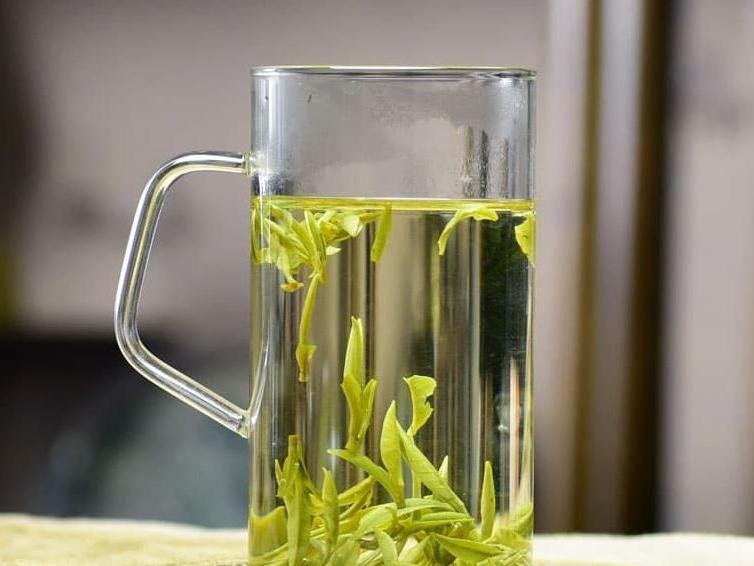
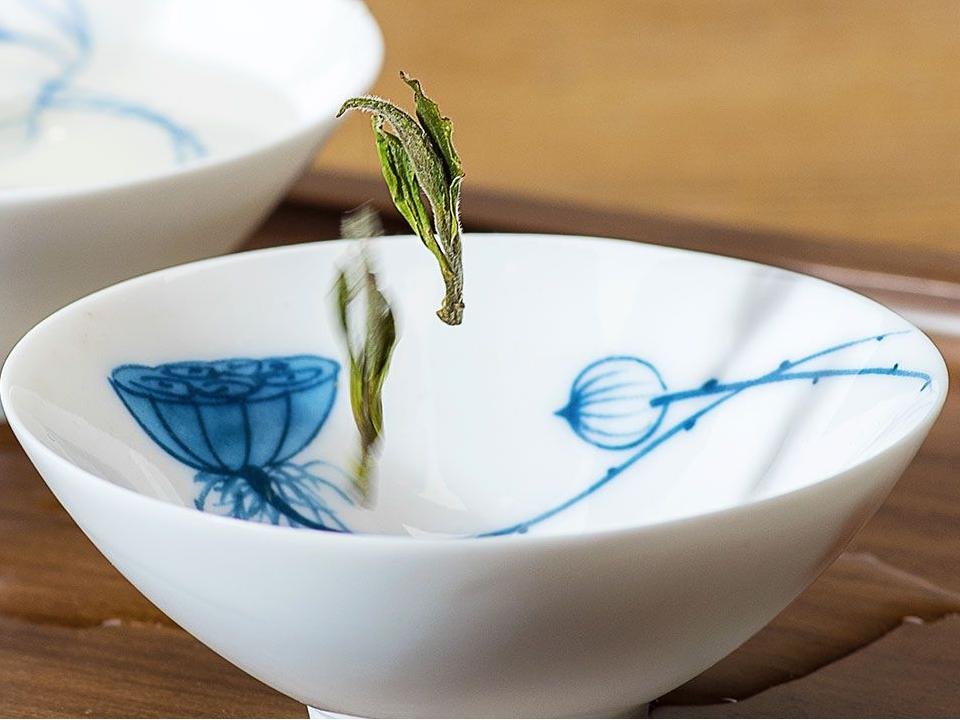
| Liquor: | Pale yellow |
| Taste: | Smooth and mellow, sweet and refreshing;
no hint of sharpness or bitterness even after brewing for a long time; lingering sweet aftertaste |
| Tea Bush: | Huangshan large-leaf tea bush species |
| Tea Garden: | Dailing Tea Garden |
| Caffeine: | Low caffeine (less than 10% of a cup of coffee) |
| Storage: | Store in airtight, opaque packaging; keep refrigerated |
| Shelf Life: | 18 Months |
 |
Cup Method |
 |
Chinese Gongfu Method |
 |
Teacup: 8.8oz / 250ml | |
Gaiwan: 3.8oz / 110ml |
 |
185℉ / 85℃ | |
185℉ / 85℃ |
 |
2 Teaspoons / 2g Tea | |
4g Tea |
 |
Brewing time: 3 – 5 mins | |
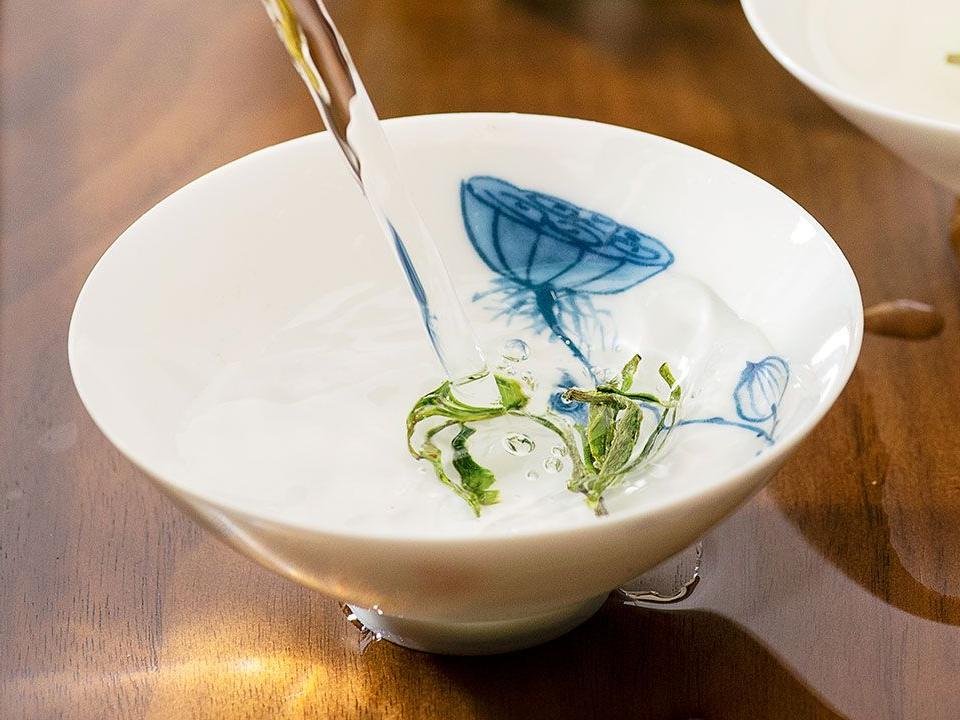
4 steeps: rinse, 20s, 30s, 50s, 70s |
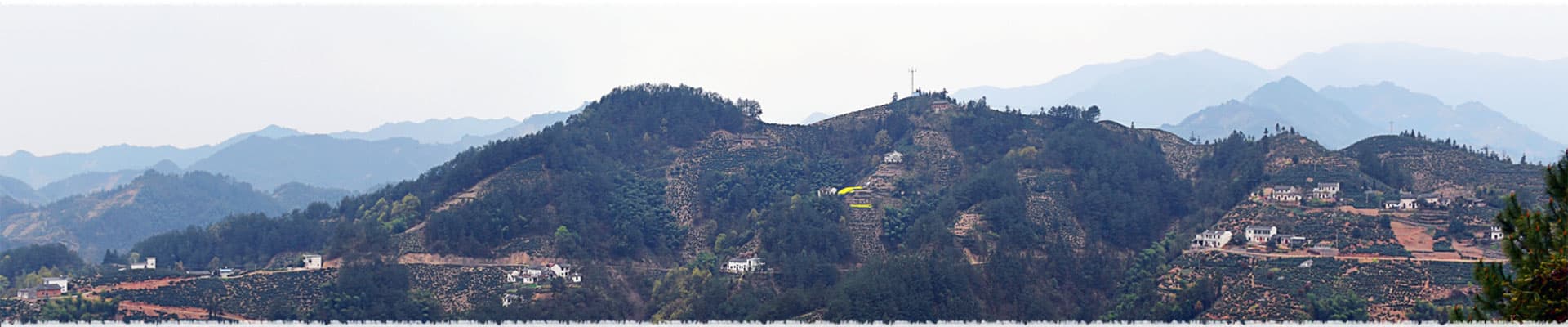
Dailin Tea Garden is located in Da Guyun village in Huang Shan. Da Guyun originally got its name from the surrounding mountains and valleys. The tea garden lies in remote parts of the high mountains, where the air is clean, the climate is moist and the four seasons are distinct. The only crops grown by farmers in this area are tea and chrysanthemums.
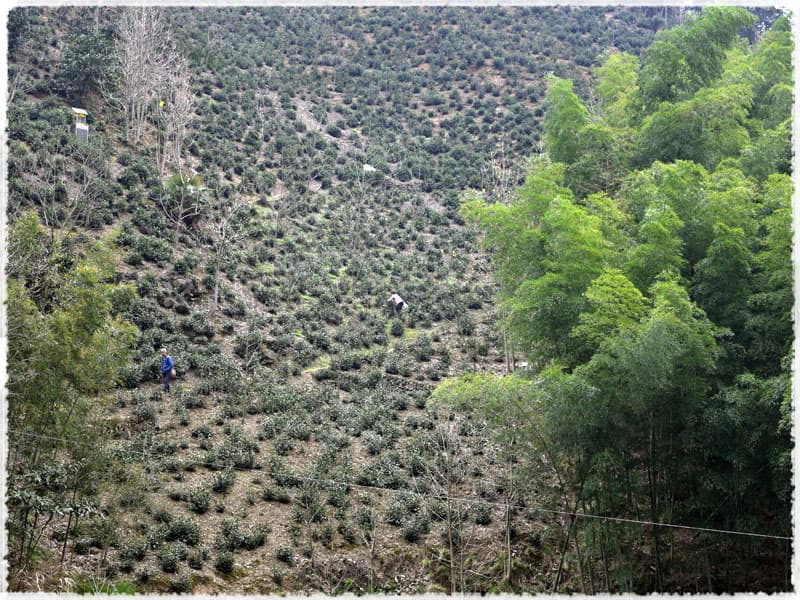
Tea farmers brave the steep slope of the hill to pick tea. It’s an extremely difficult task.
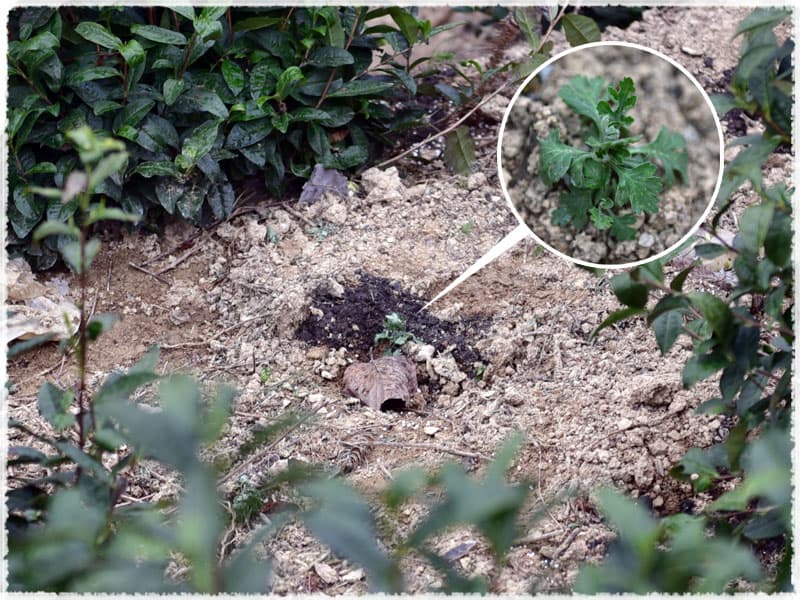
Chrysanthemum seedling grows among tea trees. Farmers in this area only grow tea and chrysanthemums.
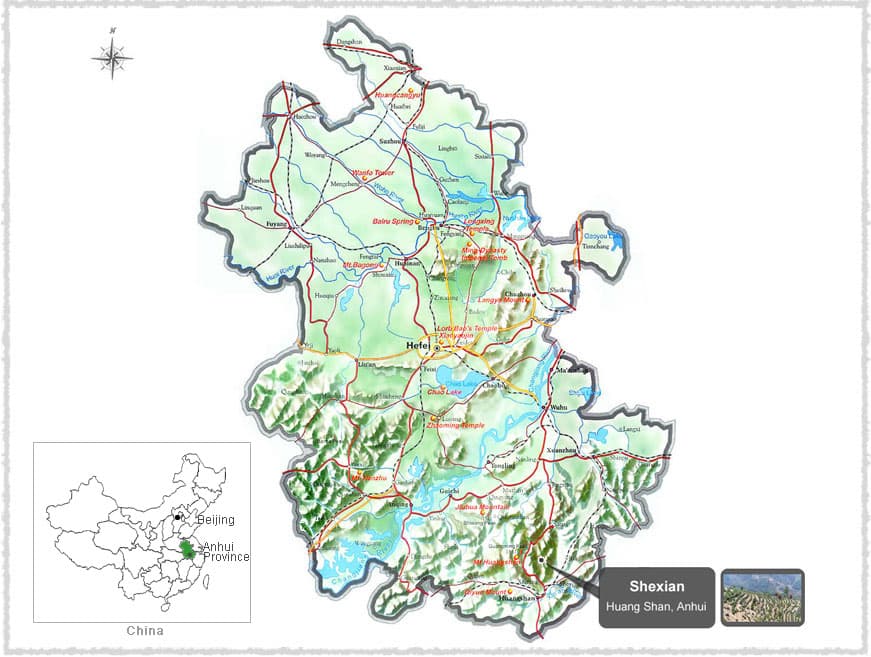
Shexian County (歙县), also known as She County, is a famous historic and cultural city in the south of Anhui Province. It is geographically located at 118°15′E to 118°53′E, 29°30′N to 30°7′N. The county is a part of Huangshan City and covers an area of 2122 square kilometers.
These fresh tea leaves come from tea trees of Huangshan’s large-leaf species, which were originally distributed in Huang Shan. Its characteristics include early sprouting, dense sprouting, strong buds, and abundant fuzz. This species puts forth many buds in the spring and has strong resistance to severe cold in the wintertime.
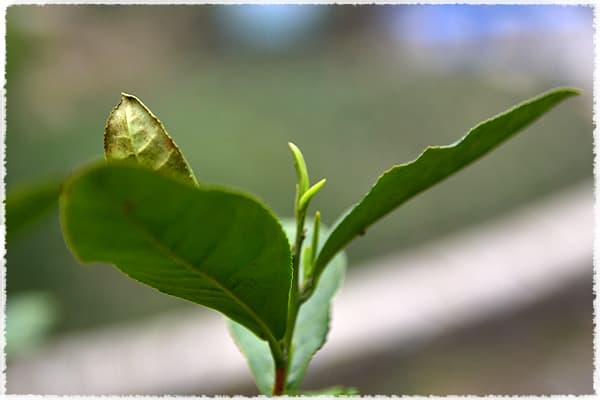
A sample of one bud with two leaves of spring tea from this species contains about 5.2% amino acid, 24.50% tea polyphenols, 138.04mg/g of catechin and 44.03% aqueous extract.
Since this tea should ideally be grown in the high mountains, with cool and cloudy weather, the area around Mt. HuangShan in Anhui has been used to cultivate high quality tea for centuries. Modern HuangShan MaoFeng tea, however, traces its roots back to the late 1800’s when a merchant called Xie Zheng An, who fled the war at the time, decided to setup a family tea business at HuangShan Mountain. Named after where it was produced – HuangShan mountain, and its appearance – looking like a fur covered mountain peak, the tea his family produced quickly became very popular in China due to its excellent quality, great taste and enticing aroma.
Additional information
| ounce | 4 oz(113g), 8 oz(227g) |
|---|
Related products
-
Sale!

Moonlight Dragon Ball White Tea
Price range: $11.80 through $20.80 Select options This product has multiple variants. The options may be chosen on the product page -
Sale!
Jasmine Silver Needle White Tea (Mo Li Yin Zhen)
Price range: $18.80 through $32.80 Select options This product has multiple variants. The options may be chosen on the product page -
Sale!

Lu An Gua Pian Green Tea
Price range: $19.80 through $37.80 Select options This product has multiple variants. The options may be chosen on the product page -
Sale!
Award Winning En Shi Yu Lu Green Tea
Price range: $23.80 through $40.80 Select options This product has multiple variants. The options may be chosen on the product page
Reviews
There are no reviews yet.