Description
| Origin: | Lishan Mountain, Taichung, Taiwan |
|---|---|
| Season: | Autumn Tea |
| Harvest Date: | Oct. 18, 2024 |
| Baking Scale: | Lightly baked |
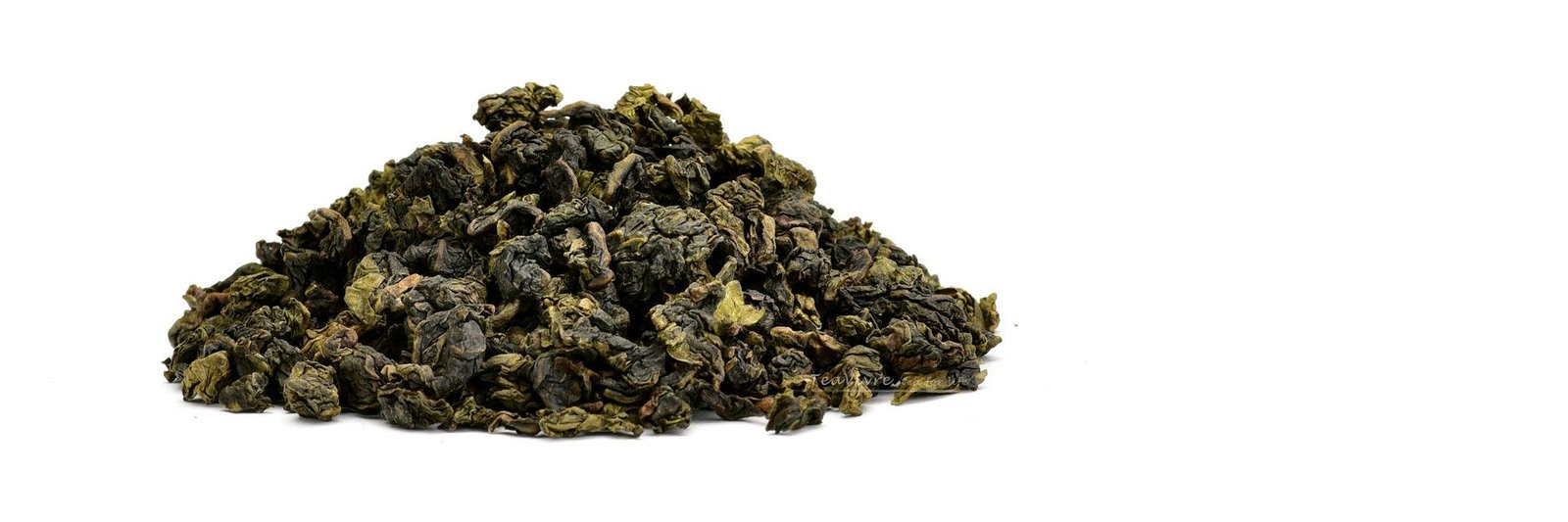
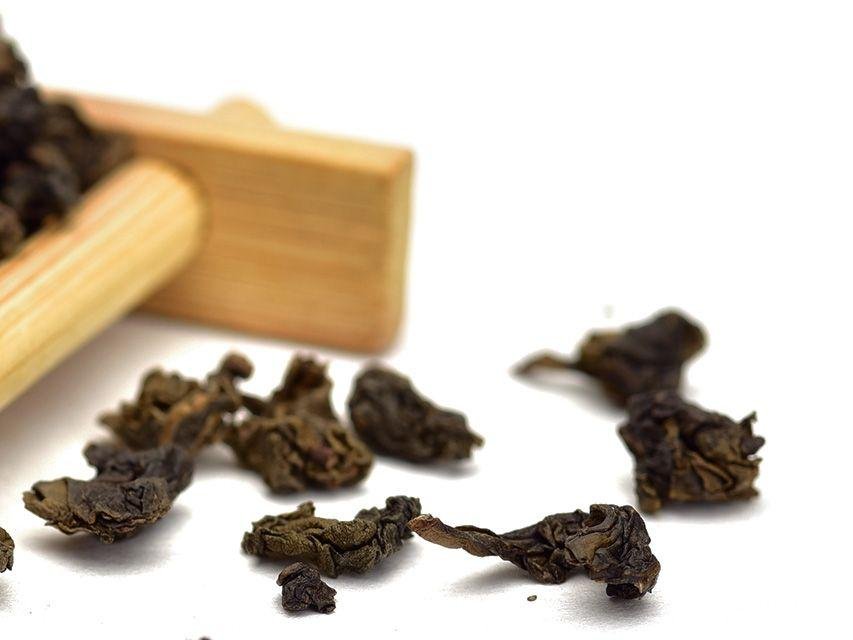
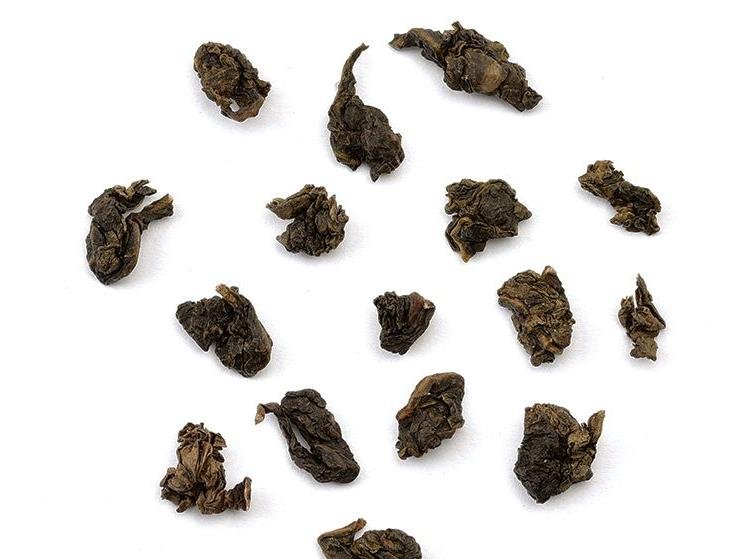
| Dry Leaf: | Rolled to semi-ball shape |
| Aroma: | Toasty and aromatic with a slight floral aroma |
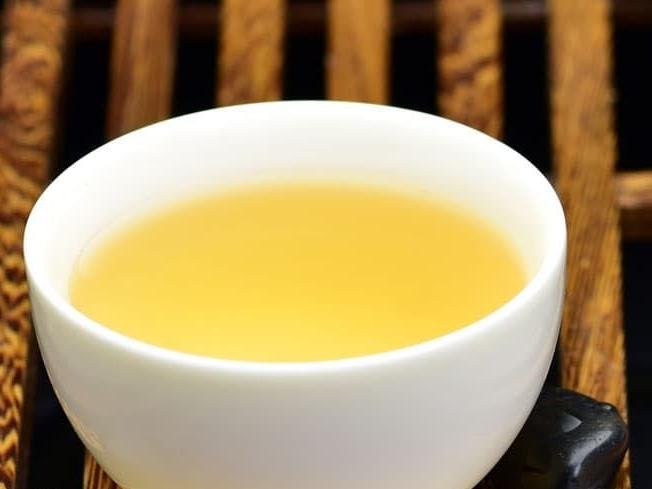
| Liquor: | Bright golden in color |
| Taste: | Smooth, baked flavor and sweet fruity notes of peach,pleasant fragrance and sweet aftertaste |
| Tea Bush: | C. sinensis cv. Tieguanyin |
| Tea Garden: | Qibang Tea Garden |
| Caffeine: | Moderate caffeine (less than 20% of a cup of coffee) |
| Storage: | Store in airtight, opaque packaging; keep refrigerated |
| Shelf Life: | 24 Months |
 |
Cup Method |
 |
Chinese Gongfu Method |
 |
Teacup: 12oz / 355ml | |
Gaiwan: 3.8oz / 110ml |
 |
212℉ / 100℃ | |
212℉ / 100℃ |
 |
3 Teaspoons / 5g Tea | |
7g Tea |
 |
Brewing time: 3 – 5 mins | |
6 steeps: rinse, 20s, 30s, 40s, 50s, 60s, 70s |
| Rinse time is around 5 seconds |
Qibang Tea Garden is located in Lishan at an altitude of 2000m, the highest tea production region in Taiwan. The growing environment here is pollution-free and clean, since the mountain is covered with natural, virgin forests. Because of the large difference in temperature from morning to evening, the short duration of sunlight, and the persistent clouds and mist throughout the year, the tea leaves from this garden are thick and smooth, high in quality for tea production.
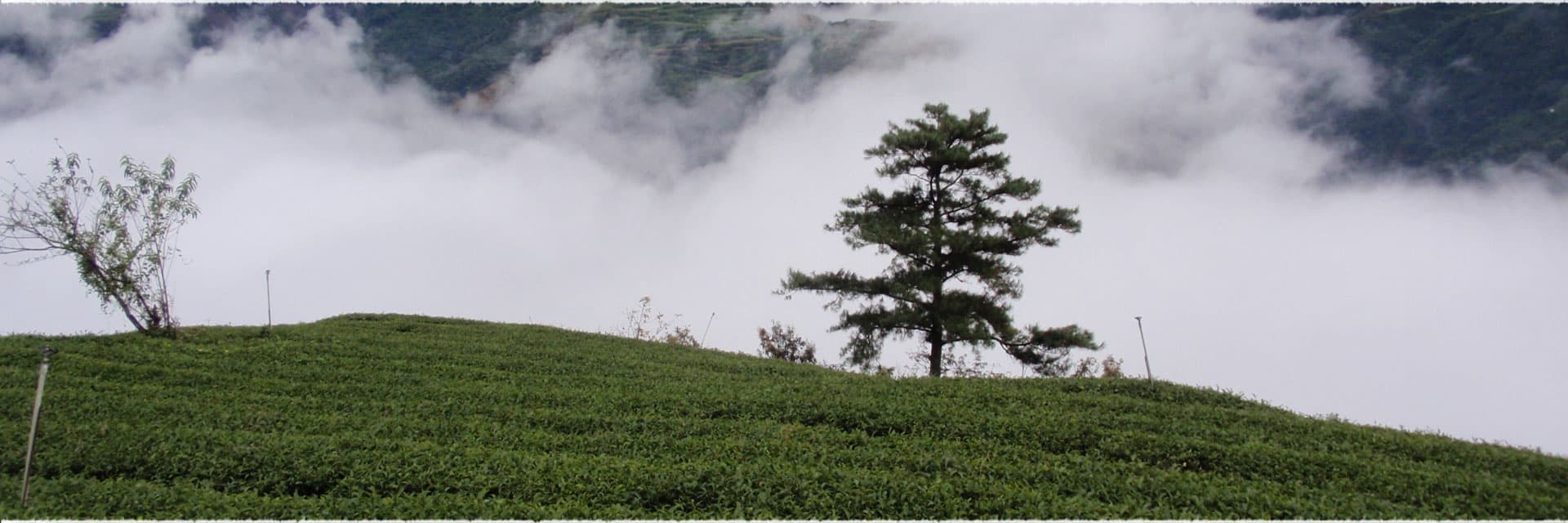
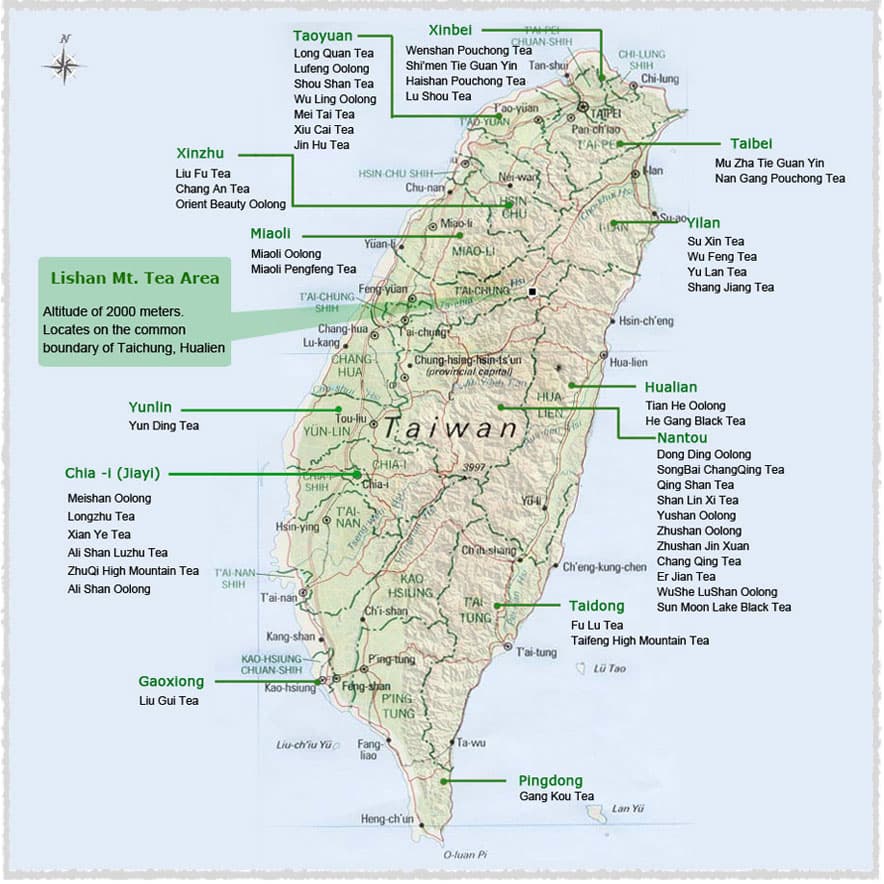
This carefully-selected Tie Guan Yin comes from Lishan, in Taizhong, Taiwan. The main production areas for tea here include Fushoushan Farm, Cuifeng, Cuilan, Wuling, and many others, all across 1200m to 2600m in altitude. Lishan, with its beautiful mountainous scenery, is famous for its high-grade oolong tea.
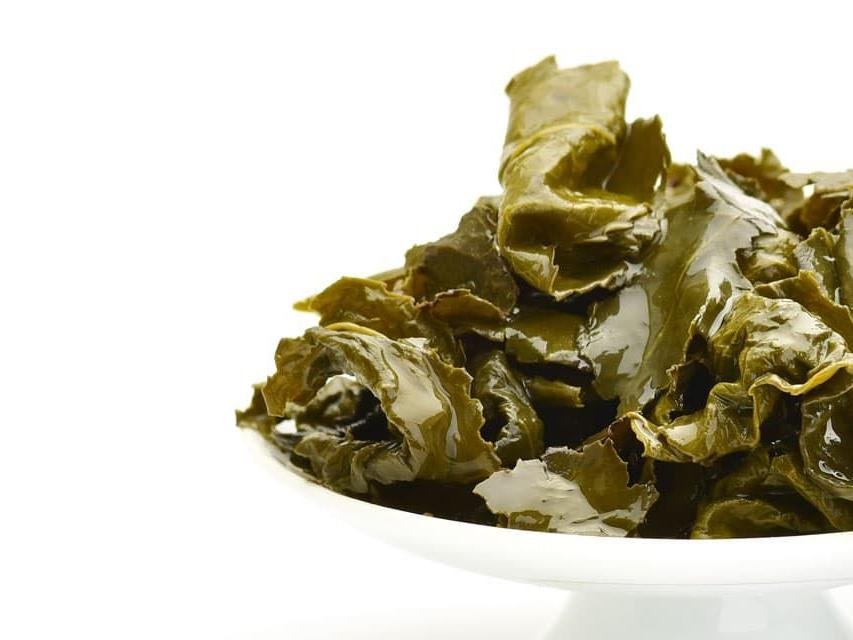
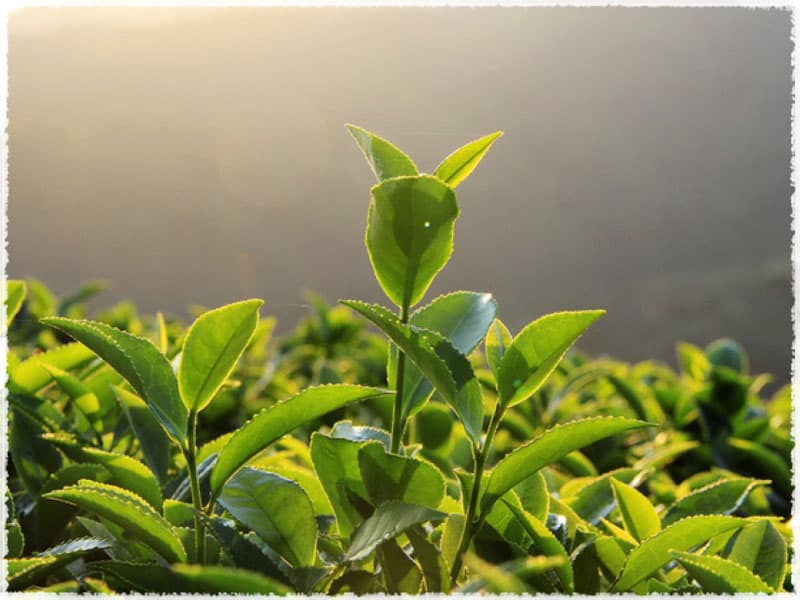
The Tie Guan Yin varietal of tea spreads through sexual propagation, growing as a shrub with a medium-sized oval-shaped leaf, deep emerald-green in color, thick but fragile, and with a slight curve along its length and a wavy edge. The central dent of the leaf is thin, and the buds are lovely purple-red in color; this tea has earned the phrase “delicious but difficult” to describe it, since only fertile soil, qualified tea shrubs, and appropriate planting and cultivation methods can produce the highest quality tea from these leaves and give a bountiful harvest.
According to legend, there was a kind of wild tea tree growing between cliffs in ancient times, too far out of reach for farmers to pick in the conventional method. To combat this, the farmers started tying ropes around their waists so that they could climb the cliff to pick the leaves, just like monkeys.
Another legend states that monkeys were used instead, to climb the cliffs and pick the leaves for the farmers. People named this tea as Ma Liu Mie, meaning it was picked by monkeys; Ma Liu is the name of the monkey used by people in Guangzhou, Guangxi, and Hainan, while Mie means “picking”. This name also marks this tea as very precious, and high-quality.
Additional information
| ounce | 4 oz(113g), 8 oz(227g) |
|---|
Related products
-
Sale!
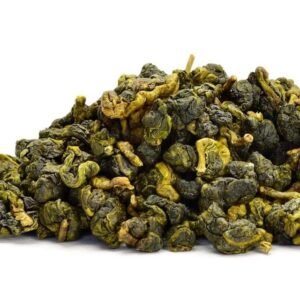
Taiwan Jin Xuan Milk Oolong Tea (Flavored)
Price range: $15.90 through $25.80 Select options This product has multiple variants. The options may be chosen on the product page -
Sale!
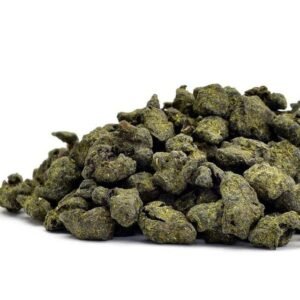
Taiwan Ginseng (Lan Gui Ren) Oolong Tea
Price range: $12.90 through $19.90 Select options This product has multiple variants. The options may be chosen on the product page -
Sale!
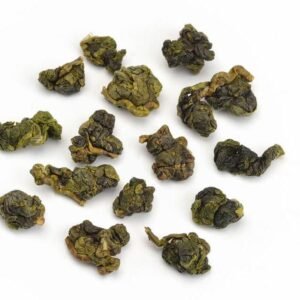
Award Winning Superfine Taiwan Ali Shan Oolong Tea
Price range: $19.90 through $39.90 Select options This product has multiple variants. The options may be chosen on the product page -
Sale!

Zhangping Shui Xian Oolong Tea
Price range: $19.90 through $44.90 Select options This product has multiple variants. The options may be chosen on the product page
Reviews
There are no reviews yet.